Artifact Friday: Missing in Action Telegram
Updated: Jul 25

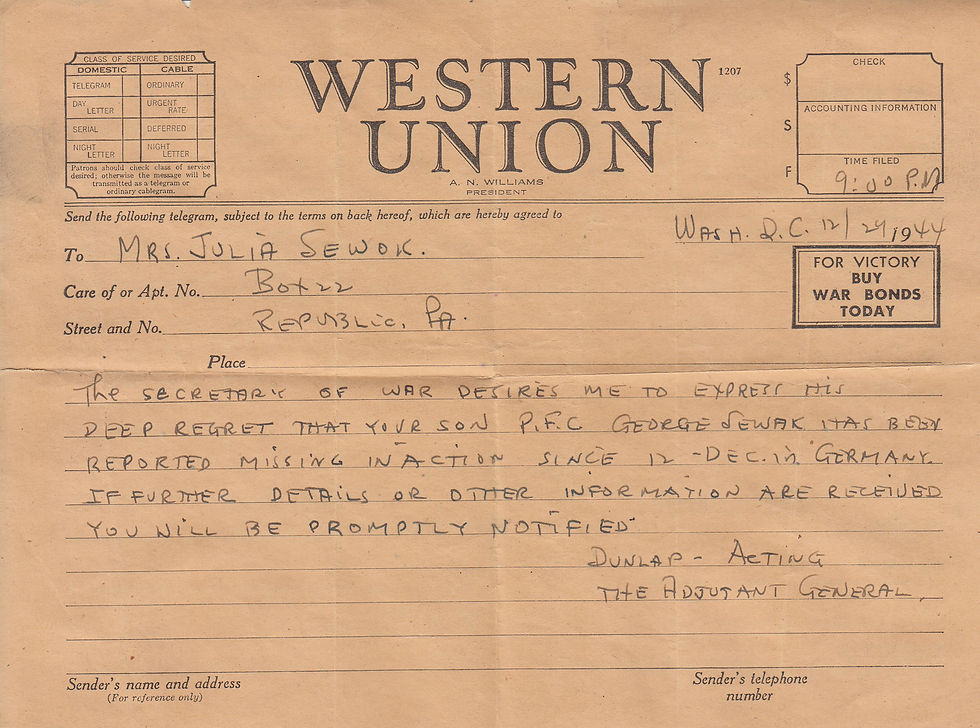
On December 12, 1944, George Sewak was pronounced Missing in Action just days before the Battle of the Bulge. In a telegram sent to Sewak's mother, Mrs. Julia Sewak, it stated that her son had gone missing in Germany and that she would be promptly notified of any changes. Right after being notified of her son's missing status, the Battle of the Bulge would begin on the Western front.
The Battle of the Bulge commenced on December 16, 1944, and was a key turning point of World War II due to it being the last major offensive of the German army. The battle itself was named after the German offensive that formed in the shape of a bulge in an attempt to break Allied forces in two. This offensive was planned to take Allied forces by surprise and take their supplies and resources due to German resources being significantly depleted. With harsh winter conditions and heavy fighting, there were significant losses on both sides of the conflict.
Through harsh losses, Allied troops held out and were able to deliver a successful counterattack that led to the German army losing the Battle of the Bulge on January 25th, 1945. After this loss, the German army lost a considerable number of resources and was fully defeated a few months after the battle took place.
Sewak’s prisoner status and story speak to what happened at the Battle of the Bulge and its outcome. Sewak himself felt the effects of the harsh conditions many soldiers fighting felt, such as frostbite, starvation, and lice. While imprisoned by the German army, Sewak was moved a total of eight times in four months throughout Germany.
His constant moving reflects the wide amount of depleted and broken resources that corrupted Germany during its final months. Sewak was liberated by a U.S. Armored division on April 12th, 1945, where he was able to return home. Sewak's story and timing of events show the brutality and climactic events of World War II. Sewak's “Missing in Action Telegram” is more than a document; rather, it provides a resilient story of a resilient man and his contributions made to Allied forces.


Comments